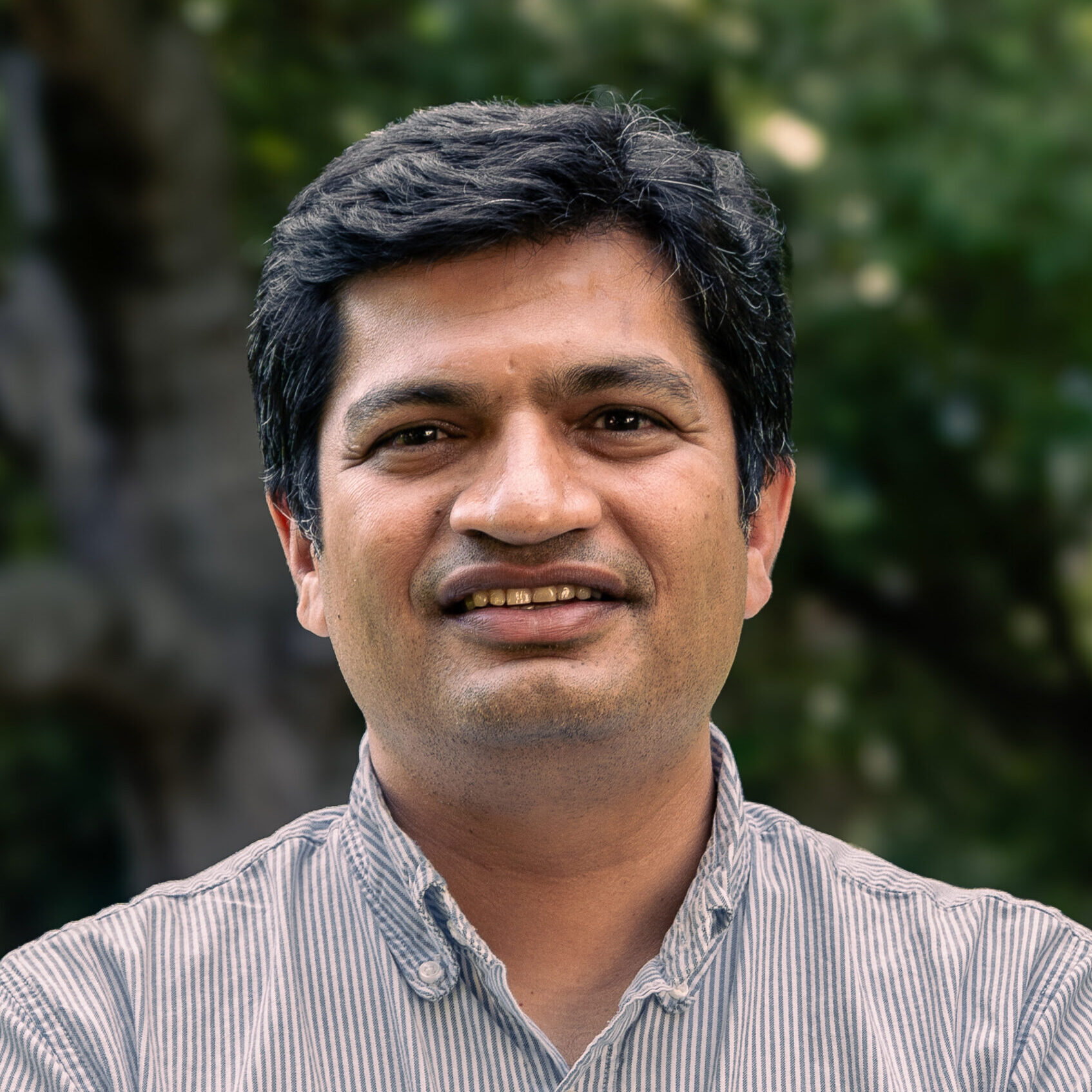
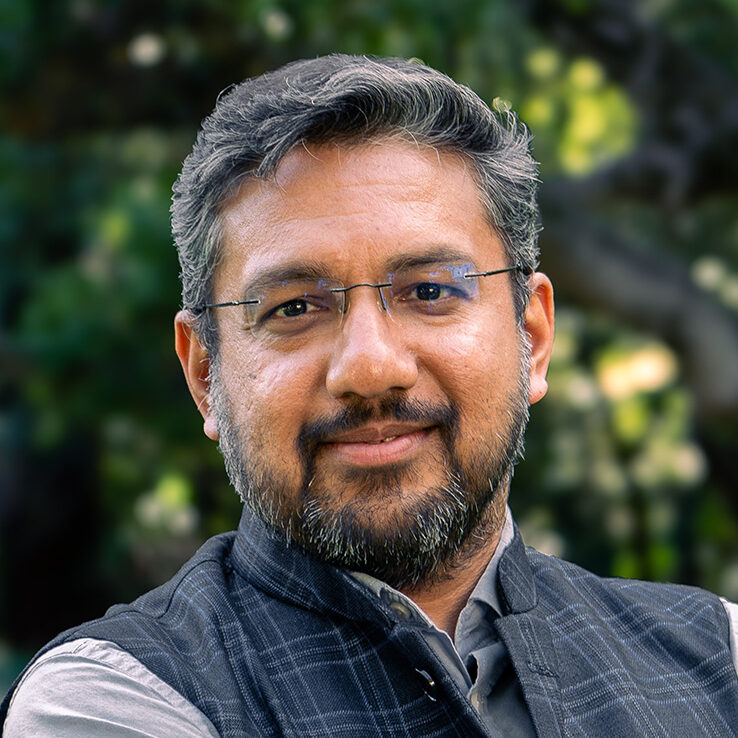
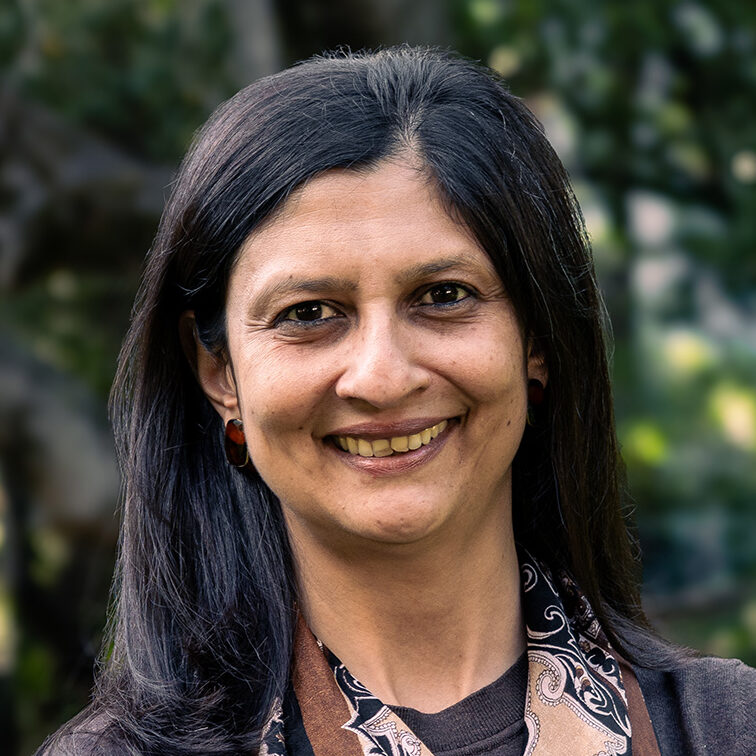
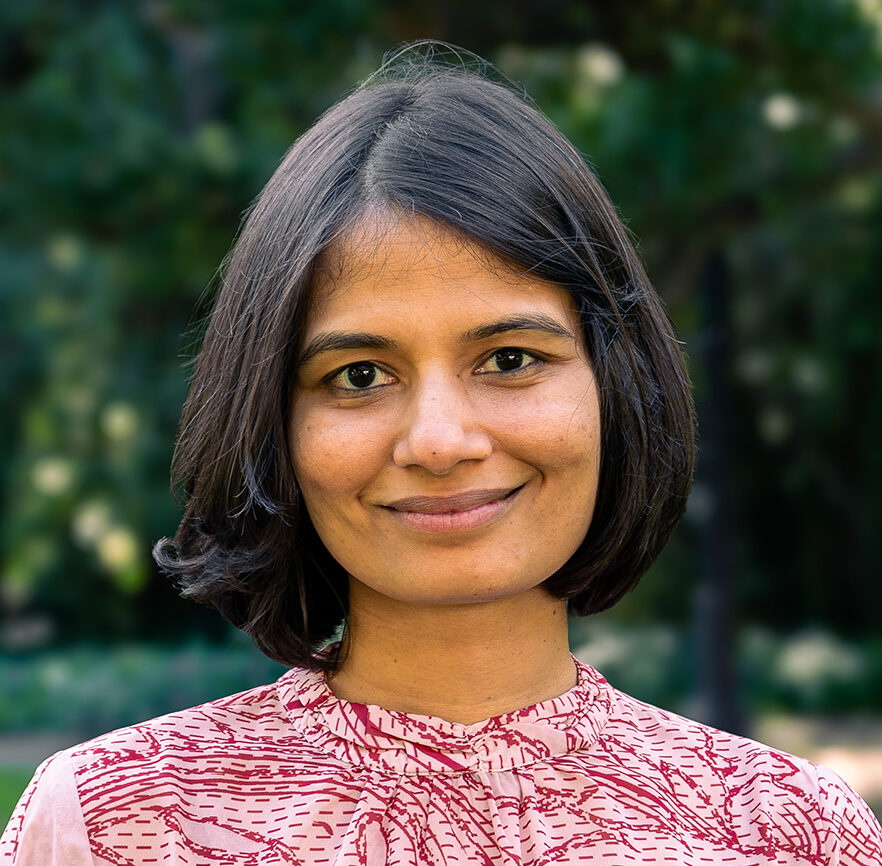
The India Energy & Climate Center (IECC) team has a strong track record of successful scientific & policy work globally and in India, and comes from a diverse set of backgrounds, fields, and affiliations:
Amol Phadke
Faculty Director, India Energy & Climate Center
Associate Adjunct Professor, Goldman School of Public Policy (GSPP), UC Berkeley
Nikit Abhyankar
Co-Faculty Director, India Energy & Climate Center Associate Adjunct Professor, Goldman School of Public Policy (GSPP), UC Berkeley
Shruti M. Deorah
Executive Director, India Energy & Climate Center UC Berkeley
Ashok Gadgil
Senior Advisor, Head of Research for Climate Resilience India Energy & Climate Center, UC Berkeley
Neelima Jain
Director, Industrial & Trade Policy, India Energy & Climate Center, UC Berkeley
Mohit Bhargava
Country Director, India Energy & Climate Center, UC Berkeley
Umed Paliwal
Director, Modeling & Analytics, India Energy & Climate Center, UC Berkeley
Paritosh Jaiswal
Associate Director, Power, India Energy & Climate Center, UC Berkeley
Dipesh Pherwan
Associate Director - Industry India Energy & Climate Ceneter, UC Berkeley
José Domínguez Bennett
Research Manager, India Energy & Climate Center, UC Berkeley
Fernando Augusto
Communications Manager, India Energy & Climate Center, UC Berkeley
Ayuko Picot
Senior Program Manager, India Energy & Climate Center, UC Berkeley
Piyush Narang
Senior Research Associate, India Energy & Climate Center, UC Berkeley
Elif Kılıç
Research Associate, India Energy & Climate Center, UC Berkeley
Rashmi Sapra
Senior Executive Assistant & Operations Lead,
India Energy & Climate Center, UC Berkeley
Affiliates
Deepak Rajagopal
Professor, Institute of the Environment and Sustainability, UCLA
David Wooley
Executive Director, Center for Environmental Public Policy, GSPP
Jennifer Bussell
Associate Professor of Political Science and Public Policy, UC Berkeley
Joshua Apte
Associate Professor, Civil and Environmental Engineering, UC Berkeley
Meredith Fowlie
Professor, Agricultural and Resource Economics; Faculty Director, Energy Institute at Haas, UC Berkeley
Sudha Shetty
Former Assistant Dean,
International Alliances &
Partnerships, GSPP
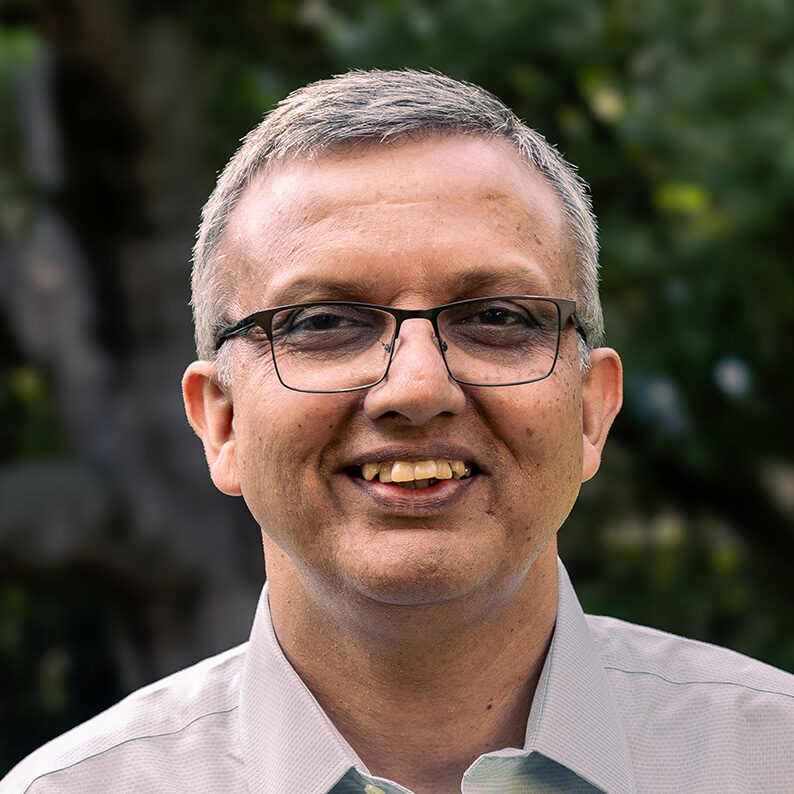
Amol Phadke
Faculty Director,
India Energy & Climate Center
Associate Adjunct Professor, Goldman School of Public Policy (GSPP), UC Berkeley
Dr. Amol Phadke is an Adjunct Associate Professor at the Goldman School of Public Policy, University of California, Berkeley, and the Faculty Director of the Energy and Climate Center at GSPP. He is also a Staff Scientist in the Electricity Markets and Policy Department at Lawrence Berkeley National Laboratory.
His expertise spans the electricity sector, with a focus on storage, transmission, and renewables in regions including the U.S., India, Japan, Korea, and Indonesia. He is particularly interested in how recent cost declines in battery storage, solar, and wind can enable an affordable energy supply and how existing grid infrastructure can be optimized for their deployment. His work also focuses on the feasibility of electrifying trains and ships, given advancements in battery technology, and explores innovative policies and business models to support this transition.
Phadke has led several influential studies on these topics and routinely advises senior policymakers worldwide. He has testified before the U.S. Congress and authored over 100 peer-reviewed journal articles and reports. His research and insights have been widely recognized and featured in prominent publications such as The New York Times, The Washington Post, The Wall Street Journal, and The Times of India. His work has also been discussed in radio and television broadcasts.
Before his current roles, Phadke worked with TATA Motors and the Prayas Energy Group. He holds a B.E. from the College of Engineering, Pune, and an M.S. and Ph.D. from the Energy and Resources Group at UC Berkeley.
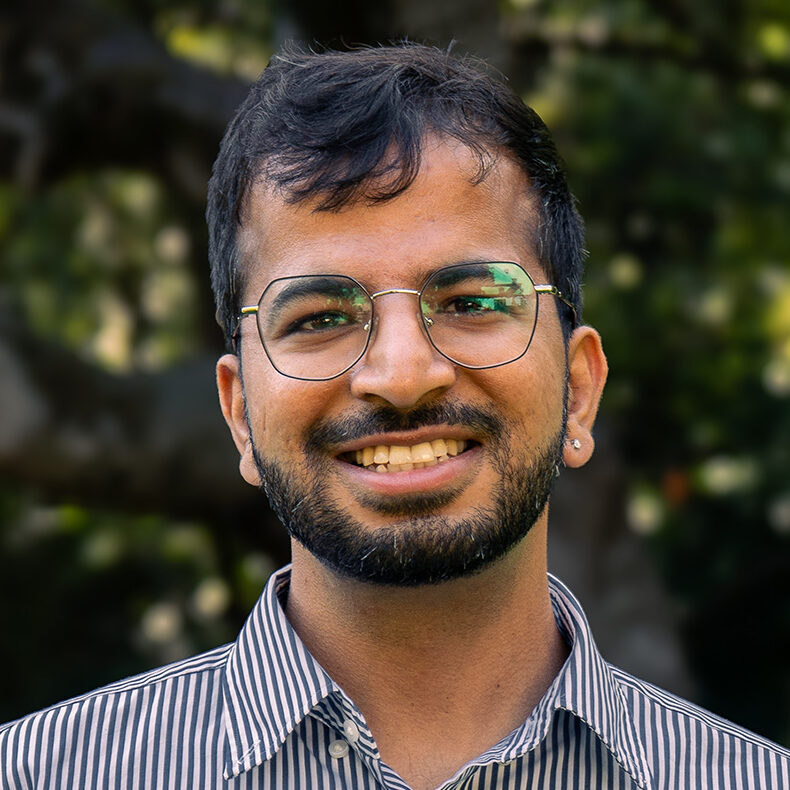
Nikit Abhyankar
Co-Faculty Director,
India Energy & Climate Center
Associate Adjunct Professor, Goldman School of Public Policy (GSPP), UC Berkeley
Dr. Nikit Abhyankar is the Co-Faculty Director of the India Energy and Climate Center at GSPP and a scientist at the Energy Markets and Policy Department at Lawrence Berkeley National Laboratory. Abhyankar specializes in renewable energy, energy efficiency, electric vehicles, electricity markets & policy, and industrial energy, with a focus on the United States and India as well as major emerging economies, including China and Indonesia.
He has led several high-impact and comprehensive energy studies such as the 2035 Reports (U.S.), Flexible Resources Initiative (India), China Clean Power, India Energy Independence, etc.
He regularly advises national / state governments, regulators, and utilities in multiple countries on designing clean energy policies and programs.
Dr. Abhyankar has over 80 journal articles, research reports, and conference papers, with his work frequently.
Abhyankar holds a Ph.D. in Environment and Resources from Stanford University.
Shruti M. Deorah
Executive Director, India Energy & Climate Center,
Goldman School of Public Policy (GSPP), UC Berkeley;
Affiliate, LBNL
Shruti M. Deorah is the Executive Director of the India Energy & Climate Center (IECC) at the Goldman School of Public Policy, UC Berkeley and an Affiliate at Lawrence Berkeley Lab.
As the Founding Executive Director of IECC, Shruti is responsible for the overall strategy, building out a team, fundraising, coordinating research objectives with her colleagues, as well as expanding the outreach and engagement with policymakers. She conducts research on regulatory & policy issues in decarbonizing India’s energy sectors, specifically accelerating deployment of renewable energy plants on India’s grid. She also designs and coordinates the curriculum for executive education programs on Energy & Environment for government officials at the Public Policy School.
Previously, she worked at the Central Electricity Regulatory Commission (CERC), India’s apex power sector regulator, and in the non-profit sector with Observer Research Foundation and the Clinton Climate Initiative. At CERC, her areas of work included tariff setting for RE plants, Renewable Energy Certificate (REC) market & mechanism, technical frameworks for grid integration & balancing of infirm RE power on the grid, and working with State Regulators on all RE related issues.
In a prior avatar, she did business development and client management for digital marketing companies in India and the US. Shruti holds a B.Tech, M.Tech in Electrical Engineering from IIT Bombay, and spent a year at the Goldman School as a visiting scholar.
Neelima Jain
Director, Industrial & Trade Policy,
India Energy & Climate Center
Neelima Jain is a senior energy professional with over two decades of experience at the intersection of clean energy, industrial strategy, and public policy across India, the UK, and internationally. At UC Berkeley’s India Energy & Climate Center, she works on green steel, clean tech trade, and power sector policy research, with a focus on turning technically viable solutions into competitive, scalable strategies.
Her perspective is grounded in hands-on delivery. She helped design and implement some of the world’s largest energy efficiency programs, including India’s UJALA initiative, which replaced conventional bulbs with LEDs in over 200 million households. She later established and led the UK subsidiary of Energy Efficiency Services Limited (EESL), serving on its board after the Ministry of Power’s first-ever overseasacquisition, whereshe built partnerships with governments, investors, and industry.
Her work has also spanned climate finance, smart meter deployments, and demand-side management regulations. She has served on IEA’s Energy Efficiency Industry Advisory Board and represented India at COP21 in Paris. She has been quoted by the Financial Times, Bloomberg, and other leading outlets, and was recognized among the 100 Most Influential in UK–India relations.
Mohit Bhargava
Country Director, India Energy & Climate Center,
Goldman School of Public Policy (GSPP), UC Berkeley
Mohit Bhargava, former CEO of NTPC Green Energy Limited (NGEL) and Executive Director of RE at NTPC Ltd, spearheaded NTPC’s renewable energy initiatives across India. Under his 55-month leadership of the RE vertical, NTPC’s RE pipeline surged from 1 GW to over 25 GW, including operational, under-construction, and planned projects with firm off-take agreements. He also initiated pilot projects in Green Hydrogen. His tenure set NGEL on course to achieve 60 GW+ capacity by 2032, with the subsidiary now holding the highest credit rating (matching NTPC’s).
With over 35 years of experience, Mohit’s expertise spans power plant commissioning, maintenance, procurement, and planning. He played a crucial role in developing NTPC’s long-term Corporate Plans, setting annual targets, and implementing strategic growth initiatives.
An Electrical Engineer by training, Mohit has undergone leadership programs at Harvard Business School and S.P. Jain Institute, Singapore. He served as a nominee Director for various NTPC joint ventures and subsidiaries.
Currently, Mohit serves as IECC’s Country Director, leveraging his extensive experience in India’s largest power generating company (75+ GW installed capacity). He brings a practitioner’s perspective and a deep understanding of the political economy of the power sector in India, helping translate research insights into practical applications and policies.
Paritosh Jaiswal
Associate Director, Power
India Energy & Climate Center
Paritosh Jaiswal is the Associate Director (Power) at the India Energy & Climate Center (IECC) at the Goldman School of Public Policy, UC Berkeley. With over 14 years of experience, he is a seasoned expert in driving the strategic, regulatory, and financial transformations necessary to modernize India’s energy landscape and accelerate energy transition.
His functional expertise spans across the power value chain, with a specialized focus on policy and regulatory reforms and utility strategy to support grid modernization and clean energy adoption. Paritosh has a proven track record of navigating complex stakeholder ecosystems, having served as a trusted advisor to senior policymakers at both Central and State government levels. Throughout his career, he has led a diverse range of high-stakes engagements for a global clientele, including multilateral and bilateral financing institutions, regulatory bodies and major public sector companies in the power sector of India.
By combining deep operational experience with consulting expertise, Paritosh bridges the gap between technical research and pragmatic policy design. Looking ahead, his work at IECC focuses on the integration of large-scale renewable energy into the national grid and the development of robust utility strategies and regulatory pathways to support a decarbonized power sector. He holds an MBA from Indian Institute of Management Lucknow (IIML) and a B.Tech in Electronics Engineering from National Institute of Technology (NIT) Surat.
Dipesh Pherwani
Associate Director - Industry
Dipesh Pherwani is Associate Director – Industry at the India Energy & Climate Center (IECC), where he leads work on decarbonization across India’s energy-intensive sectors.
Dipesh brings 16 years of experience in the energy sector, most recently at Harvard’s Belfer Center, where he researched how AI-driven data center growth is reshaping U.S. electricity markets and developed a power infrastructure and procurement framework for gigawatt-scale data center investments in India. He also advised the World Bank’s ESMAP program on hydrogen investment across emerging markets. Before Harvard, Dipesh spent eight years at India’s Ministry of New and Renewable Energy (MNRE): leading the design of the $2.1B National Green Hydrogen Mission and spending five years aligning federal and state policies and regulation to support renewable energy growth — including the Green Open Access Rules that let large industrial buyers contract directly with renewable developers, and the transmission pricing reforms that enabled over 100GW of renewable integration. He developed frameworks for India’s hydrogen-focused task forces with the U.S. and Germany, and led technical negotiations for a $3B World Bank results-based financing program.
Earlier in his career, Dipesh spent seven years in the private sector in project management and commercial roles at Reliance Infrastructure and Welspun Energy.
Dipesh holds a Master in Public Administration in International Development from Harvard Kennedy School, a MicroMasters in Data, Economics, and Development Policy from MIT, and a B.E. in Mechanical Engineering from Delhi College of Engineering.”
Ashdeep Seth
Senior Program Associate,
India Energy & Climate Center
Ashdeep is an engineer, educator, strategist, and designer working at the intersection of technology innovation and climate action. Her experience spans developing products and programs globally, across agriculture, clean energy, healthcare, education, housing, water, and environmental restoration, with an emphasis on climate resilience, grassroots engagement, and systems-level impact.
Ashdeep is a Lecturer in the Development Engineering program at the University of California, Berkeley. At the India Energy and Climate Center, her work focuses on advancing industrial decarbonization and first-of-a-kind clean energy deployments in India.
She is an instructor for Skill Up for the Earth’s Climate Solutions and Strategies course, in partnership with University of Oxford – Environmental Change Institute. She provides strategic advisory support to entities such as American Society of Mechanical Engineers, Engineering for Change, and The Lemelson Foundation. She serves as an engineering consultant to Kheyti, an Indian ag-tech social enterprise building climate-resilient solutions for smallholder farmers. Ash was the Head of Product at Riffle Ventures, a venture studio supporting climate innovation ecosystems in emerging regions, and a Jr. Board Member of Terreform ONE, and ecological-design architecture nonprofit out of MIT Media Lab.
Ashdeep holds a B.S. in Engineering: Product Design from Stanford University and a Master’s in Development Engineering from UC Berkeley. She is an avid potter, surfer, and tree climber.
Piyush Narang
Senior Research Associate, India Energy & Climate Center,
Goldman School of Public Policy (GSPP)
Piyush Narang is a computer engineer turned policy professional. He graduated from the Master of Development Practice (MDP) Program at the Goldman School of Public Policy, where his work on heat adaptation with the IECC team earned him the Zilberman Award for Outstanding Capstone.
During his master’s program, Piyush worked with the NYC Mayor’s Office of Climate and Environmental Justice on building decarbonization and the Alameda County Department of Environmental Health on developing regulatory policies for hydrogen fuels in the county. Piyush was also involved in student union organizing with the Berkeley UAW. His MDP allowed him to specialize in Climate and Energy, while his diverse prior work experience enables him to bring multiple perspectives to his work.
Piyush began his professional journey with Teach For India, working on improving educational outcomes in a high-risk community in Delhi, India. He then transitioned to a policy consulting organization that aims to incorporate citizen voices in public policy. Piyush enjoys spending time with his friends and family, cooking, and backpacking in forests. He grew up in an agricultural town in India, which helped him foster a deep connection with nature.
Elif Kılıç
Research Data Analyst,
India Energy & Climate Center
Elif Kılıç is formally trained as a linguist and environmental engineer. She earned her Master of Environmental Engineering at UC Berkeley, where she was a GEM Fellow (2023) and a Digital Transformation of Development Fellow (2024) focused on extreme humid heat adaptation for vulnerable workers. During her master’s, she advanced the conventional heat index by integrating realistic thermophysiological limits, solar radiative load, and task-specific metabolic heat—yielding a field-relevant metric for high humidity, direct sun, and heavy-work conditions. Elif’s foundations include work at MIT Lincoln Laboratory evaluating mycelium composites for sustainable packaging, and research at the Georgia Institute of Technology on plastic-waste biodegradation and its implications for materials lifecycles.
At the India Energy & Climate Center, she develops applied tools that translate weather and climate data into district-level, decision-ready indicators. These products support planners and public-health agencies with clearer guidance on work–rest cycles, shade and hydration needs, early-warning thresholds, and infrastructure priorities for outdoor laborers, informal workers, and heat-vulnerable neighborhoods. Bridging rigorous modeling and clear communication, Elif aims to align climate analytics with on-the-ground adaptation choices that prevent heat illness and protect livelihoods.
Rashmi Sapra
Senior Executive Assistant & Operations Lead
Rashmi Sapra is the Senior Executive Assistant & Operations Lead at the India Energy & Climate Center (IECC), at the University of California, Berkeley’s Goldman School of Public Policy. With over 15 years of experience across diplomatic missions, international organizations, and public sector institutions, she specializes in executive operations, core and operational frameworks of diplomatic protocol, stakeholder engagement, and government relations across India and South-Asia regions.
At IECC, her work focuses on driving operational excellence through executive coordination, stakeholder engagement and efficient delivery of strategic programs and partnerships. Prior to IECC, she held executive support and operations roles at Invest India, CGIAR, and the Embassies of Spain and Israel, where she worked extensively with senior government officials, development partners, and international stakeholders. She holds an MBA from Sikkim Manipal University and a Bachelor’s degree in English Literature from the University of Delhi.